
Why Lightwave
Local internet, on purpose. Built here. Owned here. Routed here.
Six things you won't get from a cable company headquartered in Atlanta.
- No federal grants
- Routed Alabama-first
- No data sales
- An American answers
Available in Bibb, Chilton, and Choctaw counties.
They wrote off rural Alabama
They didn't show up. We did.
The big providers had decades to wire up Bibb, Chilton, and Choctaw counties. They didn't. Some areas they passed over once. Some they passed over twice. Some they came back to only after a federal subsidy arrived.
We started in 2019 in Centreville with a tower, a radio, and a list of neighbors waiting on internet that worked. No grants. No subsidies. We built the network ourselves and we still own it.
Six things you won't get anywhere else.
Not adjectives. Facts. Each one is a deliberate choice about how this network is built and how it gets routed.
-
Built without federal grants.
We've been building this network since 2019 without BEAD, RDOF, USDA ReConnect, or any other federal broadband subsidy. The big providers usually only build rural America after the government writes them a check. We didn't wait for the check.
-
Montgomery-hubbed. Not Atlanta.
The Southeast's network maps almost all funnel through Atlanta or Dallas. Ours funnels through Montgomery, at the RSA Dexter Avenue Datacenter. Alabama traffic on Alabama infrastructure. Less freight on someone else's freeway.
-
Peering at MGMIX.
We're a member of the Montgomery Internet Exchange, alongside Meta, Hurricane Electric, and the State of Alabama. Alabama-to-Alabama traffic stays in Alabama. Lower latency. Fewer hops. Less dependency on transit through somebody else's backbone.
-
Minimum data collection.
We collect only what federal and state law require us to keep. No tracking, no targeted profiles, no behavioral inventory. What you do online is your business.
-
We never sell your data.
Not to advertisers. Not to data brokers. Not to "research partners." Not anonymized, not aggregated, not packaged. Our revenue comes from the bill you pay, full stop.
-
American support. Local crews.
The phone gets answered in Centreville, by a person who works for the same shop as the technician who'd come fix it. No call-center contractor. No phone tree. No overseas script. Just a neighbor.
How fixed wireless works.
No buried lines. No aerial drops. A radio shot from a tower to a small antenna at your house, then standard WiFi indoors. Three steps.
- 1
A tower in your neighborhood.
We mount small-cell radios on towers and water tanks across Bibb, Chilton, and Choctaw counties. Each one runs on battery backup with generator support, and connects back to our gear in Montgomery on licensed microwave.
- 2
A small antenna at your house.
One of our crews mounts a small radio on your roof or eave with a clean shot to the tower. One cable runs from the antenna into your house. Standard install is free. We're usually in and out in two hours.
- 3
A Vilo router inside.
We include a Vilo router on every install. It serves WiFi to every room, hands off cleanly between mesh nodes if you have a bigger house, and updates itself in the background. The connection on your phone looks like any other WiFi.
Lightwave vs. the alternatives.
Every kind of internet has trade-offs. Here's the honest comparison, written down.
| Lightwave | Fiber | Cable | DSL | Satellite | Starlink | |
|---|---|---|---|---|---|---|
| Top residential speed | Up to 300mbps | 1Gbps+ | 500mbps | 25mbps | 100mbps | 250mbps |
| Symmetric speeds | Yes | Yes | No | No | No | No |
| Typical latency | 10 to 50ms | 2 to 10ms | 15 to 40ms | 40 to 80ms | 500ms+ | 20 to 60ms |
| Install timeline | Under a week | Weeks to months | Days | Days | Days | Weeks |
| Buried or aerial lines | None | Required | Required | Required | None | None |
| Data caps or throttling | None | Varies | Common | Some | Strict | Soft caps |
| Contracts | None | Common | Common | Common | Common | None |
| All-in pricing | Yes | No | No | No | No | Yes |
| American support | Yes | Varies | Often offshore | Often offshore | Often offshore | Varies |
| Local crews | Yes | Varies | Contractors | Contractors | Self-install | Self-install |
Comparison reflects typical residential offerings in our service area. Your address may not have access to all of these.
Same deal, every month.
Six promises every Alabama Lightwave customer gets. Residential, business, every plan, every month.
All-in pricing.
The price you sign up at is what you pay. Taxes and fees included. Forever.
Unlimited data.
No caps. No throttling. Use the internet you paid for.
No contracts.
Month to month. People stay because we earn it.
An American answers.
Call (205) 809-9051. No phone trees. No overseas scripts. Just a real person.
Your usage stays yours.
What you do online is your business. We don't track it, sell it, or share it.
Built to stay up.
Tower-side battery backup, hardened sites, local crews.
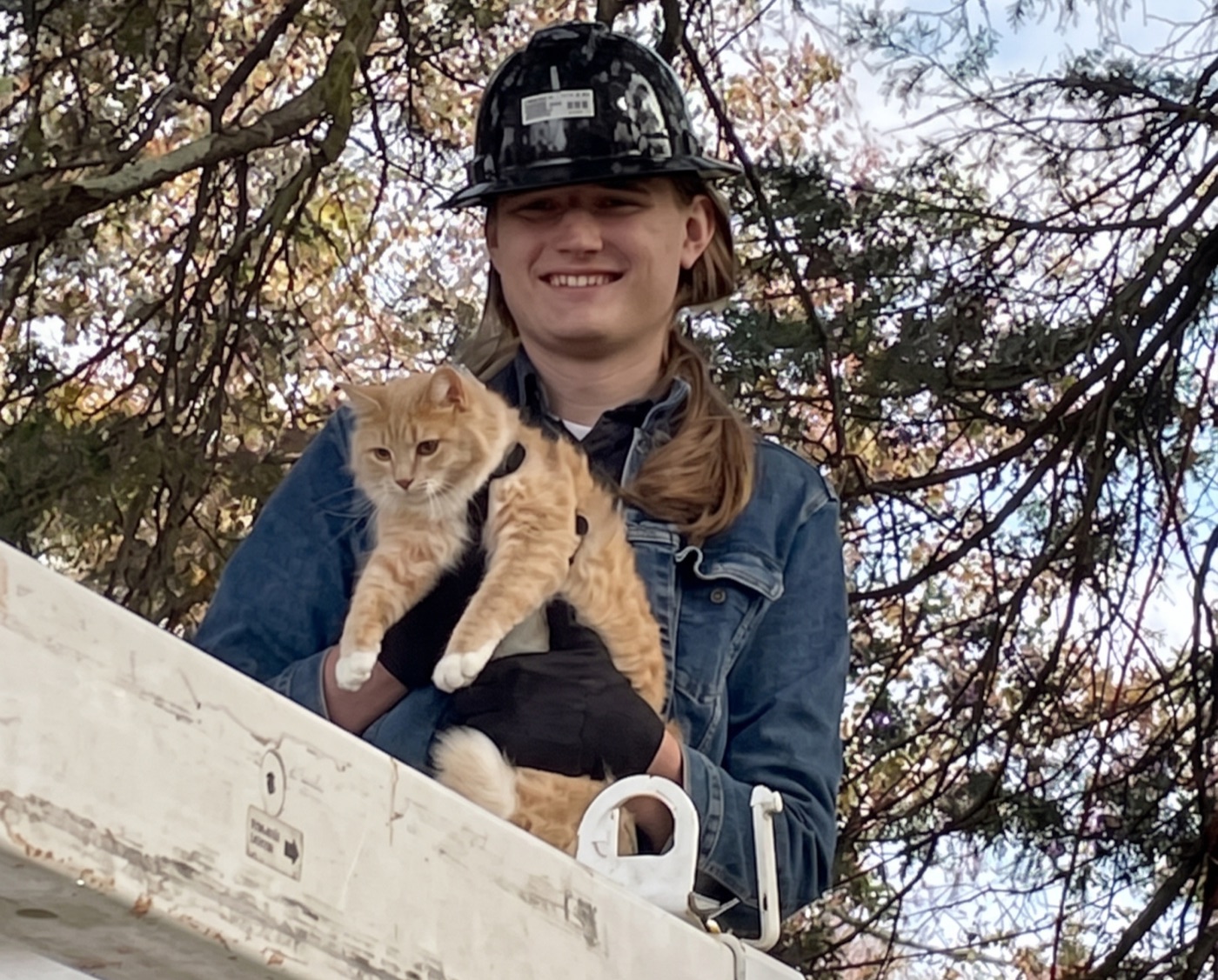
Built in Alabama. Run from Centreville.
Our office is on Court Square. The crew that climbs your roof works out of the same building. The phone that rings at (205) 809-9051 sits on a desk twenty feet from the network operations gear.
If you have a problem, we don't route you to Manila or San Antonio or a call center contractor in Tucson. You get a person you can drive over and see.
Same goes for the crew on your roof. They live around the corner. They run into you at the grocery store. If something needs fixing, they answer for it the next time you see them.
See where we coverHonest questions, answered straight.
Why didn't Alabama Lightwave take federal grants?
Because we built the network before the grants existed. We started in Centreville in 2019 on our own money and a list of neighbors waiting for internet that worked. The big providers wrote off rural Alabama for decades and only came back when the government wrote a check. We didn't wait for the check. The independence shows up in how we run the company, what we charge, and how we answer the phone.
What is MGMIX, and why does it matter to me?
MGMIX is the Montgomery Internet Exchange, a public peering fabric at the RSA Dexter Avenue Datacenter in downtown Montgomery. It's where Alabama-based networks hand traffic directly to each other instead of trucking it through Atlanta or Dallas. We peer there. Meta, Hurricane Electric, and the State of Alabama peer there. When you load a site that lives on those networks, your packets touch Alabama infrastructure first. Lower latency. Fewer hops. Less of your data on someone else's freight train.
Where do my packets actually go when I use your internet?
From your house to one of our towers, then over our backhaul to our gear at the RSA Dexter Avenue Datacenter in Montgomery. From Montgomery, traffic for any peer on MGMIX goes directly to that peer in Alabama. Traffic for the rest of the internet leaves Montgomery for the broader internet. Most Southeast carriers hub on Atlanta or Dallas. We hub on Montgomery, on purpose.
Do you sell my data?
No. We collect only what federal and state law require us to keep, and we never sell, share, or rent it. That goes for browsing data, location data, usage patterns, and everything else. The full policy lives on our privacy page. Short version: what you do online is your business.
Can wireless internet really keep up with fiber?
For the things you actually do online, yes. Our small-cell radios deliver symmetric speeds up to 300 Mbps with 10 to 50 millisecond latency. That's gaming-grade. That's video-call-grade. Fiber wins on raw peak speed in a lab. Wireless wins on install time, weather resilience, no buried lines for someone with a shovel to cut, and no aerial drop for a pine tree to snap.
What happens to my internet during a storm or a power outage?
Our towers stay up on battery backup, with generator support for longer outages. As long as you have power at your house, or a small UPS on your router, you stay online. We've watched the network keep running through the kinds of weather that take down the utility for a day.
Who picks up the phone at (205) 809-9051?
A person at 38 Court Square West in Centreville, between 9 and 5 Central, Monday through Friday. No phone tree. No overseas script. Usually the same person who would dispatch a crew if you needed one. After hours, 24/7 priority support is available on every business plan and as a $100/mo add-on for residential.
Are you a real ISP, or just reselling somebody else's network?
Real ISP. We own the towers, the radios, the backhaul, the routing gear, and the peering relationships. We're a member of MGMIX, we maintain our presence at the RSA Dexter Avenue Datacenter, and we file our own FCC paperwork. When something breaks, we fix it. We don't open a ticket with a wholesaler.
See if we can reach you.
Check your address. If we cover you, we'll have you online in under a week. If we don't yet, we'll put you on the list.